

Author: Mariam Siddiqui
When I was young, I still remember when my dad took me and my two brothers to see a new Pixar movie that everyone was buzzing about: A Bug’s Life. We laughed at the different comical characters and marvelled at the colors and dynamic storyline, our hands salty with popcorn butter, but the underlying message was something that still resonates with me. The story seemed so simple: Flick the ant, small and seemingly powerless, stands up against the oppressive grasshoppers who kept stealing food the ants spent all season picking, and inspires the colony to unite. I remember the powerful scene when Hopper threw a single seed at his fellow grasshopper and asked if it hurt, and then buried the grasshopper with hundreds of seeds. I remember his chilling quote, “You let one ant stand up to us, then they all might stand up! Those ‘puny’ little ants outnumber us 100 to 1. And if they ever figure that out, there goes our way of life!” Beneath the movie’s bright colors and playful humor was something deeply profound. It wasn’t just about one ant’s courage; it was about an entire colony reclaiming its power after being fractured by fear. I didn’t know it then, but that story mirrored a world I was still beginning to understand—a world where colonization and oppression had fragmented entire cultures and nations, attempting to strip people of their dignity, their identities, and their belief in their own worth.
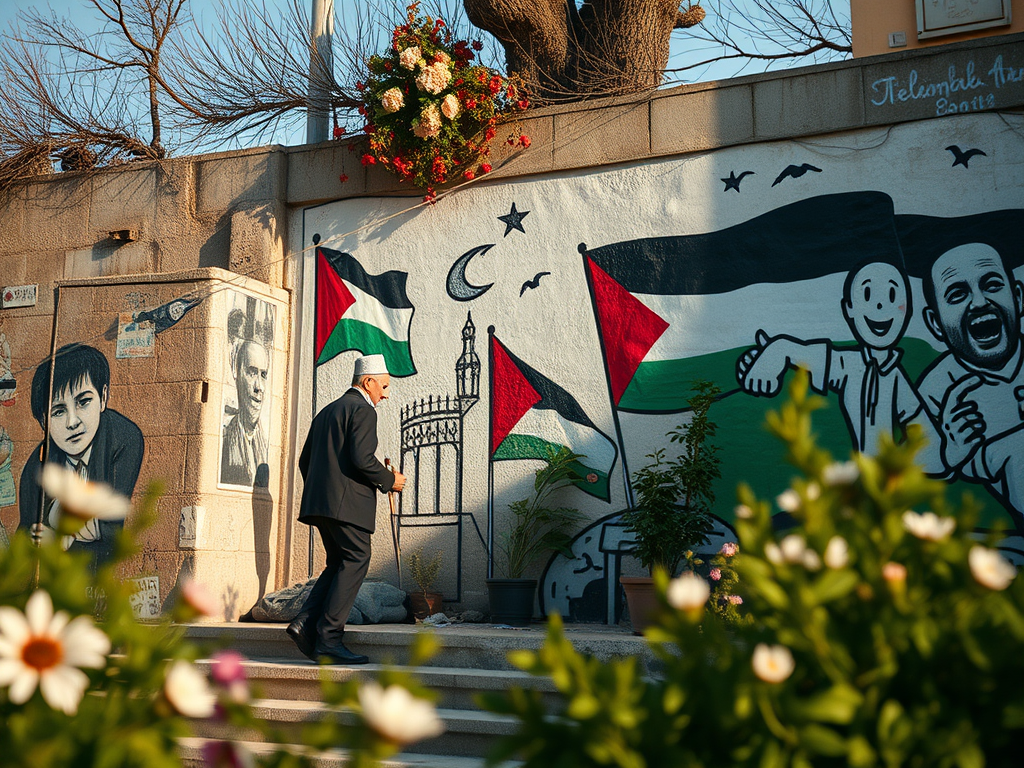
The Palestinian’s resistance is a story that stirs something deep within all of us – we all see ourselves in them. A single nation lit a fire inside all of us, the entire world was ablaze with the fire of resistance. It is the fight of a people not only for their land but for their language, culture, and history—a fight against the forces of colonization that have sought to erase them. This erasure is painfully familiar; our Canadian soil is woven with a deep traumatic history of residential schools that was a cultural war against our Native brothers and sisters. Generational trauma is embedded in their lineage, for how long can colonizers brush over the fact that they had killed over 4,000 children and psychologically and physically tortured them, brainwashing them into believing their heritage was filthy?
The effects of oppressive colonialism affects my culture as well and strikes a personal chord. In South Asia, the British inflicted extended periods of famine which killed millions and affects how we metabolize our food to this day (which is why many South Asians have non-alcoholic fatty liver disease, which was an evolutionary survival mechanism our bodies had to develop to withstand the effects of malnutrition). Overtime the British divide-and-rule led to the partition of India and the creation of Pakistan. It was not just the drawing of arbitrary borders; it was the violent severing of communities, the shattering of shared histories. Colonial powers fragmented us South Asians, left scars on our bodies, languages and cultures, and made us question our worth. Before British colonization and their implementation of “divide and rule” policies, Muslims and Hindus in the Indian subcontinent shared a long history of cohabitation, cultural exchange, and collaboration. Colonization was a disease that created animosity and division between rich cultures.
This disease is embedded in the narrative that is fed by mainstream media about Palestine, fabricating a narrative that the Palestinian genocide is an issue of Muslims versus Jews. I remember a Palestinian friend of mine who told me in Gaza, her grandfather’s best friend growing up was Jewish, that there was no animosity between Muslims, Christians and Jews before the creation of Israel. Fragmentation is a very sharp tool of the oppressor – if there is division, there is weakness. Even as the dust of partition settled, the seeds of division—religious, linguistic, and cultural—had already taken root, scattering us further. But colonization’s greatest weapon isn’t just physical fragmentation—it’s psychological. Growing up, I heard aunts and uncles in our community praising anything “European” as if it were inherently superior. A handbag from Italy or a dress from France was cherished and flaunted, while something made in our own homeland was dismissed as basic or unremarkable. These subtle betrayals, woven into daily life, reflected the deeper truth: colonization didn’t just take resources—it planted the belief that our own wasn’t good enough.
The irony is sharp and cruel: colonization made us not just victims of external forces but participants in our own diminishment, furthering the fragmentation. Whitening creams line bathroom shelves, promising brighter futures alongside lighter skin. The message of the colonizer was clear: our worth, our beauty, our very value as people, had been tied to how closely we could mimic those who once ruled over us. And it is time for us to reclaim our narrative.
Like the ants in A Bug’s Life, the Palestinian people awaken a fire inside us. It was a single ant who stood up and declared a new revolution: “The ants pick the food, the ants keep the food, and the grasshoppers leave!” The Palestinians love the land, they will live in the land, and the aggressors will leave. We love our culture, we honor our people, and the colonized mindset will diminish. Just like the ants who were told they were weak, we must reclaim our story because we have morality on our side. The Palestinian resistance belongs to anyone who has ever fought to reclaim a piece of what they love. It calls us to resist the internalized narratives that divide us—to see beauty in ourselves, worth in our cultures, and strength in our unity. Colonization may have tried to scatter us, but the human spirit is like light passing through a prism—broken into many colors, but still whole in its brilliance. And like those ants, we will rise, one by one, until the colony is united, and the oppressors learn that even the smallest among us can change the world.
 Sporas
Leave a comment